Buy indiaozone.com ?
We are moving the project
indiaozone.com .
Are you interested in purchasing the domain
indiaozone.com ?
domain@kv-gmbh.de · 0541-91531010
Buy indiaozone.com ?
How do you transform an object clause or a subject clause into a dependent clause (subordinate clause)?
To transform an object clause or a subject clause into a dependent clause, you can add a subordinating conjunction at the beginning of the clause. For example, changing "I know that he is coming" (object clause) to "I know when he is coming" (dependent clause). Another way is to remove the subject or object pronoun and change the verb form to make it dependent on the main clause. For instance, changing "She believes she can win" (subject clause) to "She believes she can win" (dependent clause). **
Is an infinitive clause a subordinate clause?
Yes, an infinitive clause is a type of subordinate clause. It functions as a single unit within a sentence and is dependent on the main clause for its meaning. Infinitive clauses typically begin with the word "to" followed by a verb, and they can serve various purposes such as expressing purpose, result, or obligation. **


Similar search terms for Clause
Top-Angebote
Products related to Clause:
-
Daily Deals Depot Santa Clause Peeker Yard Ornament, Christmas Fence Decoration, Indoor Outdoor Holiday Placard, DIY Festival Gift redBring the festive spirit to life with this Christmas Fence Ornament Santa Clause Peeker Yard Decoration, the perfect way to surprise neighbors and delight guests this holiday season. Designed for indoor and outdoor use, this charming Santa Clause...21,97 $*Shipping: 0,00 $Secure redirect to the provider
-
Baba Air PurifierYour baby deserves clean air at home. Thanks to the *NEW* BEABA Air Purifier, the first in its class designed for the baby-care market, you can make your nursery a safe and healthy space for your baby with the click of a button. Advanced 4-Stage...229,95 $*Shipping: 0,00 $Secure redirect to the provider
-
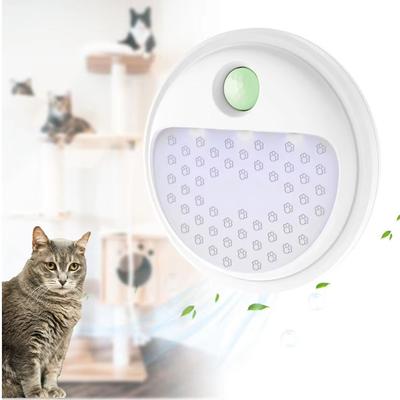
Inspired Finds Smart Cat Odor Purifier Rechargeable Litter Box Deodorizer Pet Air Purifier Smart Cat Odor Purifier Rechargeable Litter Box Deodorizer Pet Air PurifierKeep your home smelling fresh even with multiple pets thanks to this smart cat odor purifier designed for litter boxes, pet toilets, and small spaces. This compact device quietly works in the background to neutralize smells instead of just masking...99,99 $*Shipping: 0,00 $Secure redirect to the provider
-
Monster Cable Filter-Monster Replacement Compatible with Whirlpool Large Air Purifier Kit for Air Purifier ModelsFilter-Monster branded replacement filter kit compatible with Whirlpool Large Air Purifier models AP51030K, AP51030KB, AP45030K, APR45130L, WP500 series and WP1000 series.45,99 $*Shipping: 0,00 $Secure redirect to the provider



-
What are main clause-subordinate clause constructions?
Main clause-subordinate clause constructions are sentences that consist of a main clause and one or more subordinate clauses. The main clause is a complete sentence that can stand alone, while the subordinate clause depends on the main clause for its meaning and cannot stand alone. Subordinate clauses often begin with subordinating conjunctions such as "because," "although," "if," or "when," and they provide additional information or context to the main clause. These constructions allow for more complex and nuanced sentence structures, and they are commonly used in both spoken and written language. **
-
Can an adverbial clause also be a subject clause or an object clause?
No, an adverbial clause cannot be a subject clause or an object clause. An adverbial clause functions as an adverb to modify a verb, adjective, or adverb in a sentence. Subject clauses and object clauses, on the other hand, serve as the subject or object of the main clause, respectively. Each type of clause has a specific grammatical function within a sentence. **
-
Is the main clause and subordinate clause correct?
To determine if the main clause and subordinate clause are correct, you need to ensure that they are grammatically sound and that they make sense when combined. The main clause should be able to stand alone as a complete sentence, while the subordinate clause provides additional information but cannot stand alone. Checking for subject-verb agreement and proper punctuation between the two clauses can help confirm their correctness. **
-
How do I recognize a relative clause, a conjunctional clause, and an interrogative clause?
A relative clause typically starts with a relative pronoun (such as who, whom, whose, which, or that) and provides more information about a noun in the main clause. A conjunctional clause, on the other hand, is introduced by a conjunction (such as and, but, or because) and connects two independent clauses. An interrogative clause is a type of clause that asks a question and is typically introduced by an interrogative pronoun (such as who, what, when, where, why, or how) or an interrogative adverb (such as how, when, or where). **

How can I recognize a relative clause, a conjunctional clause, and an interrogative clause?
A relative clause is a type of dependent clause that typically starts with a relative pronoun (such as who, whom, whose, which, or that) and provides additional information about a noun in the main clause. A conjunctional clause, on the other hand, is a dependent clause that functions as an adverb, adjective, or noun in a sentence and is connected to the main clause by a conjunction (such as because, although, if, when, etc.). An interrogative clause is a type of clause that asks a question and typically begins with a question word (such as who, what, where, when, why, or how) or with a helping verb followed by the subject. **
Is the accompanying clause in direct speech a main clause or a subordinate clause?
The accompanying clause in direct speech can be either a main clause or a subordinate clause, depending on its role in the sentence. If the clause is expressing a complete thought and can stand alone as a sentence, then it is a main clause. However, if the clause is dependent on the rest of the sentence for its meaning and cannot stand alone, then it is a subordinate clause. It's important to consider the context and structure of the sentence to determine the role of the accompanying clause in direct speech. **
Top-Angebote
Products related to Clause:
-
Combo Retail Shop Christmas Fence Ornaments, Santa Clause Peeker, Yard Ornaments, Indoor Outdoor, DIY Festival Gift redBring the magic of the holidays to your home with these charming Christmas Fence Ornaments. Featuring a playful Santa Clause Peeker, these yard decorations are perfect for both indoor and outdoor spaces. Crafted to brighten your garden, lawn, or...44,97 $*Shipping: 0,00 $Secure redirect to the provider
-
ModernMart Christmas Fence Decoration: Santa, Snowman, Reindeer, Penguin Peeker Ornaments For Indoor Outdoor Festivities Color: Santa ClauseChristmas Fence Decoration Santa Clause Snowman Reindeer Penguin Peeker Yard Ornaments Indoor Outdoor Festival Gift Christmas Fence Decoration Santa Clause Snowman Reindeer Penguin Peeker Brand new & high quality Material: PP plastic Color:...20,00 $*Shipping: 0,00 $Secure redirect to the provider
-
Daily Deals Depot Santa Clause Peeker Yard Ornament, Christmas Fence Decoration, Indoor Outdoor Holiday Placard, DIY Festival Gift redBring the festive spirit to life with this Christmas Fence Ornament Santa Clause Peeker Yard Decoration, the perfect way to surprise neighbors and delight guests this holiday season. Designed for indoor and outdoor use, this charming Santa Clause...21,97 $*Shipping: 0,00 $Secure redirect to the provider
-
Baba Air PurifierYour baby deserves clean air at home. Thanks to the *NEW* BEABA Air Purifier, the first in its class designed for the baby-care market, you can make your nursery a safe and healthy space for your baby with the click of a button. Advanced 4-Stage...229,95 $*Shipping: 0,00 $Secure redirect to the provider
-
How do you transform an object clause or a subject clause into a dependent clause (subordinate clause)?
To transform an object clause or a subject clause into a dependent clause, you can add a subordinating conjunction at the beginning of the clause. For example, changing "I know that he is coming" (object clause) to "I know when he is coming" (dependent clause). Another way is to remove the subject or object pronoun and change the verb form to make it dependent on the main clause. For instance, changing "She believes she can win" (subject clause) to "She believes she can win" (dependent clause). **
-
Is an infinitive clause a subordinate clause?
Yes, an infinitive clause is a type of subordinate clause. It functions as a single unit within a sentence and is dependent on the main clause for its meaning. Infinitive clauses typically begin with the word "to" followed by a verb, and they can serve various purposes such as expressing purpose, result, or obligation. **
-
What are main clause-subordinate clause constructions?
Main clause-subordinate clause constructions are sentences that consist of a main clause and one or more subordinate clauses. The main clause is a complete sentence that can stand alone, while the subordinate clause depends on the main clause for its meaning and cannot stand alone. Subordinate clauses often begin with subordinating conjunctions such as "because," "although," "if," or "when," and they provide additional information or context to the main clause. These constructions allow for more complex and nuanced sentence structures, and they are commonly used in both spoken and written language. **
-
Can an adverbial clause also be a subject clause or an object clause?
No, an adverbial clause cannot be a subject clause or an object clause. An adverbial clause functions as an adverb to modify a verb, adjective, or adverb in a sentence. Subject clauses and object clauses, on the other hand, serve as the subject or object of the main clause, respectively. Each type of clause has a specific grammatical function within a sentence. **
Similar search terms for Clause
-
Inspired Finds Smart Cat Odor Purifier Rechargeable Litter Box Deodorizer Pet Air Purifier Smart Cat Odor Purifier Rechargeable Litter Box Deodorizer Pet Air PurifierKeep your home smelling fresh even with multiple pets thanks to this smart cat odor purifier designed for litter boxes, pet toilets, and small spaces. This compact device quietly works in the background to neutralize smells instead of just masking...99,99 $*Shipping: 0,00 $Secure redirect to the provider
-
Monster Cable Filter-Monster Replacement Compatible with Whirlpool Large Air Purifier Kit for Air Purifier ModelsFilter-Monster branded replacement filter kit compatible with Whirlpool Large Air Purifier models AP51030K, AP51030KB, AP45030K, APR45130L, WP500 series and WP1000 series.45,99 $*Shipping: 0,00 $Secure redirect to the provider
-
JML Chillmax Air Pure Chill – Portable Air Cooler & PurifierOverview The JML Chillmax Air Pure Chill is a portable, 3-in-1 cooling solution that keeps you comfortable in hot weather. Combining air cooling, purification, and humidification, it delivers clean, refreshing airflow wherever you need it. With its compact, lightweight design and energy-efficient operation, it’s perfect for home, office, or bedside use. Key Features & Benefits 3-in-1 Functionality – Cools, purifies, and humidifies the air Portable & Compact – Easy to move between rooms or use on a desk Adjustable Airflow – Multiple fan speeds for personalised comfort Energy-Efficient – Low power consumption compared to traditional air conditioners Built-In Air Purification – Helps remove dust and impurities from the air Quiet Operation – Ideal for bedrooms, offices, and relaxation spaces Easy to Use – Simple controls for quick setup and operation Product Description Stay cool and refreshed with the JML Chillmax Air Pure Chill, a portable air cooler that also purifies and humidifies for improved air quality. Perfect for hot summer days, it uses evaporative cooling technology to deliver a natural, refreshing breeze while helping to filter dust and hydrate the air. Its compact design makes it easy to position anywhere, from your desk to your bedside, and its energy-efficient performance ensures low running costs. Quiet, convenient, and versatile, it’s the ideal personal cooling solution for home or work.34,00 £*Shipping: 0,00 £Secure redirect to the provider
-
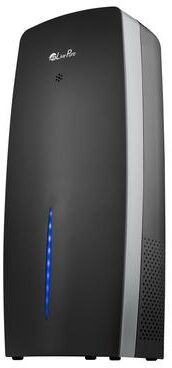
LivePure True HEPA Air Purifier & HumidifierEnjoy cleaner, healthier air and enhanced comfort with the LivePure LP460 Air Purifier & Humidifier Combo, specially designed to create a soothing environment in your bedroom, living room, or office.119,99 $*Shipping: 0,00 $Secure redirect to the provider
-
Is the main clause and subordinate clause correct?
To determine if the main clause and subordinate clause are correct, you need to ensure that they are grammatically sound and that they make sense when combined. The main clause should be able to stand alone as a complete sentence, while the subordinate clause provides additional information but cannot stand alone. Checking for subject-verb agreement and proper punctuation between the two clauses can help confirm their correctness. **
-
How do I recognize a relative clause, a conjunctional clause, and an interrogative clause?
A relative clause typically starts with a relative pronoun (such as who, whom, whose, which, or that) and provides more information about a noun in the main clause. A conjunctional clause, on the other hand, is introduced by a conjunction (such as and, but, or because) and connects two independent clauses. An interrogative clause is a type of clause that asks a question and is typically introduced by an interrogative pronoun (such as who, what, when, where, why, or how) or an interrogative adverb (such as how, when, or where). **
-
How can I recognize a relative clause, a conjunctional clause, and an interrogative clause?
A relative clause is a type of dependent clause that typically starts with a relative pronoun (such as who, whom, whose, which, or that) and provides additional information about a noun in the main clause. A conjunctional clause, on the other hand, is a dependent clause that functions as an adverb, adjective, or noun in a sentence and is connected to the main clause by a conjunction (such as because, although, if, when, etc.). An interrogative clause is a type of clause that asks a question and typically begins with a question word (such as who, what, where, when, why, or how) or with a helping verb followed by the subject. **
-
Is the accompanying clause in direct speech a main clause or a subordinate clause?
The accompanying clause in direct speech can be either a main clause or a subordinate clause, depending on its role in the sentence. If the clause is expressing a complete thought and can stand alone as a sentence, then it is a main clause. However, if the clause is dependent on the rest of the sentence for its meaning and cannot stand alone, then it is a subordinate clause. It's important to consider the context and structure of the sentence to determine the role of the accompanying clause in direct speech. **
* All prices are inclusive of VAT and, if applicable, plus shipping costs. The offer information is based on the details provided by the respective shop and is updated through automated processes. Real-time updates do not occur, so deviations can occur in individual cases. ** Note: Parts of this content were created by AI.