Buy indiaozone.com ?
We are moving the project
indiaozone.com .
Are you interested in purchasing the domain
indiaozone.com ?
domain@kv-gmbh.de · 0541-91531010
Buy indiaozone.com ?
How do you calculate the braking distance, the braking process, and the braking deceleration?
The braking distance can be calculated using the formula: braking distance = (initial velocity^2) / (2 * deceleration), where the deceleration is the rate at which the vehicle slows down. The braking process involves the driver applying the brakes, which causes friction between the brake pads and the wheels, leading to a decrease in the vehicle's speed. The braking deceleration can be calculated by dividing the change in velocity by the time it takes for the vehicle to come to a complete stop. **
How do you calculate the braking time and braking distance?
Braking time and braking distance can be calculated using the formula: Braking distance = (initial velocity^2) / (2 * deceleration) Where initial velocity is the speed of the vehicle before braking, and deceleration is the rate at which the vehicle slows down. Braking time can be calculated by dividing the braking distance by the initial velocity. These calculations are based on the assumption of constant deceleration, and may vary depending on factors such as road conditions and the vehicle's braking system. **

Similar search terms for Braking
Top-Angebote
Products related to Braking:
-
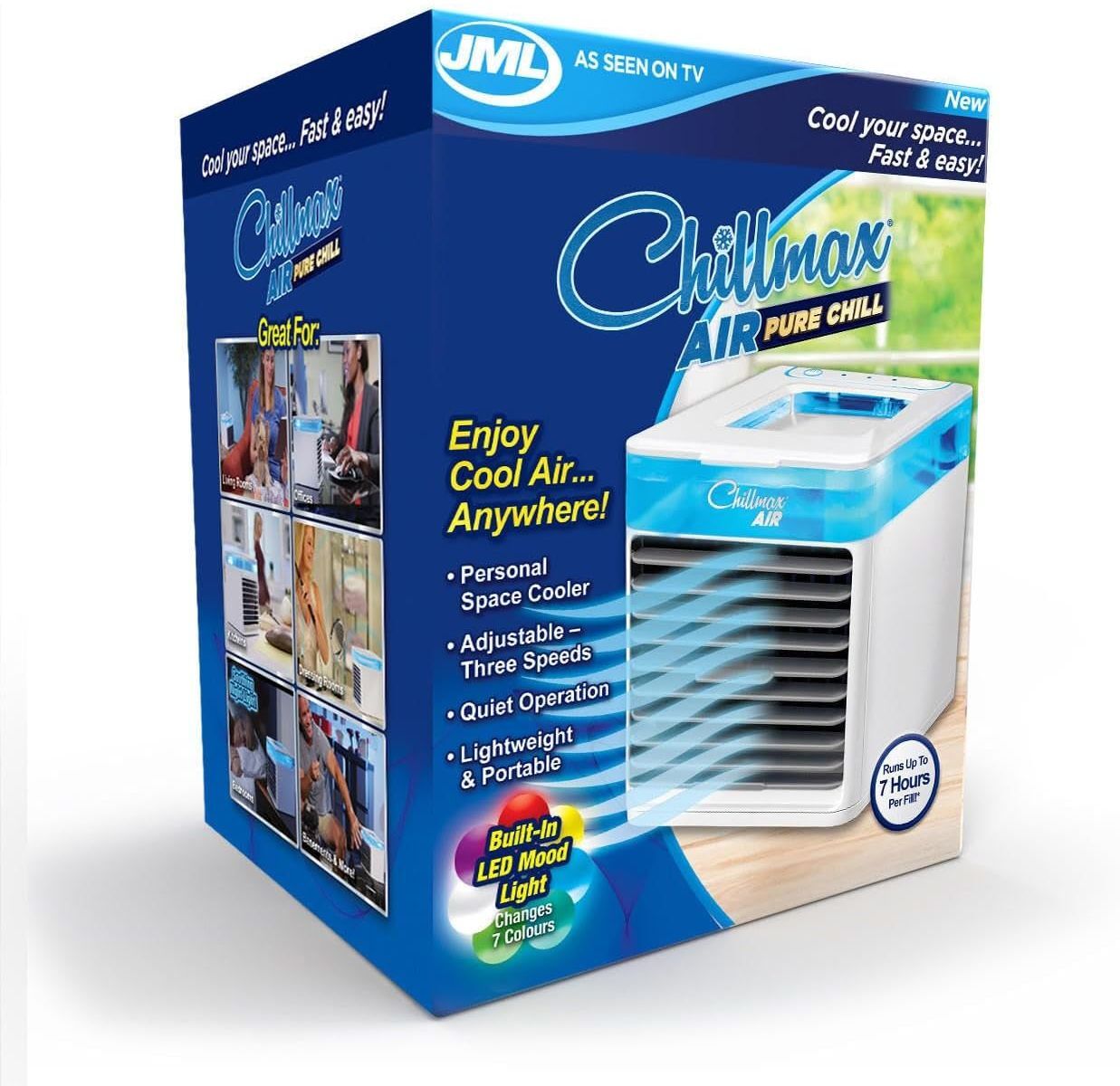
JML Chillmax Air Pure Chill – Portable Air Cooler & PurifierOverview The JML Chillmax Air Pure Chill is a portable, 3-in-1 cooling solution that keeps you comfortable in hot weather. Combining air cooling, purification, and humidification, it delivers clean, refreshing airflow wherever you need it. With its compact, lightweight design and energy-efficient operation, it’s perfect for home, office, or bedside use. Key Features & Benefits 3-in-1 Functionality – Cools, purifies, and humidifies the air Portable & Compact – Easy to move between rooms or use on a desk Adjustable Airflow – Multiple fan speeds for personalised comfort Energy-Efficient – Low power consumption compared to traditional air conditioners Built-In Air Purification – Helps remove dust and impurities from the air Quiet Operation – Ideal for bedrooms, offices, and relaxation spaces Easy to Use – Simple controls for quick setup and operation Product Description Stay cool and refreshed with the JML Chillmax Air Pure Chill, a portable air cooler that also purifies and humidifies for improved air quality. Perfect for hot summer days, it uses evaporative cooling technology to deliver a natural, refreshing breeze while helping to filter dust and hydrate the air. Its compact design makes it easy to position anywhere, from your desk to your bedside, and its energy-efficient performance ensures low running costs. Quiet, convenient, and versatile, it’s the ideal personal cooling solution for home or work.34,00 £*Shipping: 0,00 £Secure redirect to the provider
-
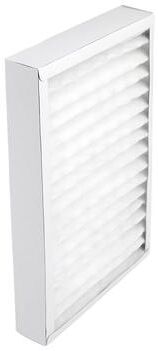
Hunter HEPAtech Replacement Air Purifier FilterFeatures: HEPAtech filtration removes up to 99.97% of airborne particles as small as 0.3 microns in size including smoke, dust, pollen, pet hair and dander, mold spores and dust mites Recommended to replace every 12 months for maximum efficiency, or...26,99 $*Shipping: 0,00 $Secure redirect to the provider
-
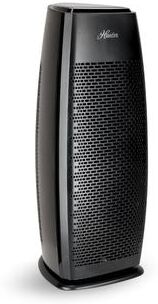
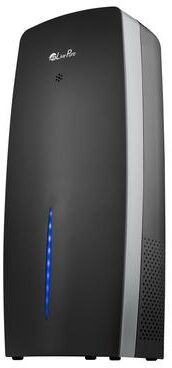
LivePure True HEPA Air Purifier & HumidifierEnjoy cleaner, healthier air and enhanced comfort with the LivePure LP460 Air Purifier & Humidifier Combo, specially designed to create a soothing environment in your bedroom, living room, or office.119,99 $*Shipping: 0,00 $Secure redirect to the provider


-
What are the differences between braking to walking speed and braking?
Braking to walking speed typically involves gradually reducing speed until coming to a complete stop, whereas braking refers to the act of slowing down a moving vehicle. When braking to walking speed, the goal is to smoothly decelerate without any sudden stops, while braking may involve more forceful actions to slow down quickly. Additionally, braking to walking speed is often used in situations where a vehicle needs to stop at a precise location, such as at a crosswalk or intersection. **
-
How do you calculate braking time and braking distance in physics?
In physics, braking time and braking distance can be calculated using the equations of motion and the principles of kinematics. The braking time can be calculated using the equation t = v/u, where t is the braking time, v is the final velocity, and u is the initial velocity. The braking distance can be calculated using the equation d = (v^2 - u^2) / (2a), where d is the braking distance and a is the deceleration. These equations take into account the initial and final velocities, as well as the deceleration of the object to determine the braking time and distance. **
-
Is braking a reflex?
Braking can be considered a reflex in certain situations. When a driver reacts to a sudden obstacle or hazard on the road by immediately pressing the brake pedal, it can be seen as a reflexive action. This is because the response is automatic and occurs without conscious thought. However, braking can also be a learned behavior, as drivers are trained to use their brakes in specific situations through practice and experience. Therefore, while braking can be a reflex in some cases, it can also be a learned and intentional action. **
-
What is the formula for braking acceleration and braking time in physics?
The formula for braking acceleration is given by \( a = \frac{v_f - v_i}{t} \), where \( a \) is the braking acceleration, \( v_f \) is the final velocity, \( v_i \) is the initial velocity, and \( t \) is the time taken to come to a stop. The formula for braking time can be calculated using the equation \( t = \frac{v_f - v_i}{a} \), where \( t \) is the braking time. These formulas are used to calculate the rate at which an object slows down when braking. **
What is the difference between braking with a clutch and braking without?
Braking with a clutch involves pressing the clutch pedal while simultaneously applying the brakes, which disengages the engine from the transmission and allows the vehicle to coast to a stop. This method is often used in manual transmission vehicles to prevent stalling. On the other hand, braking without using the clutch means simply applying the brakes without disengaging the engine from the transmission, which can cause the vehicle to stall if the engine speed drops too low. In summary, the main difference is that braking with a clutch allows the vehicle to coast to a stop without stalling, while braking without the clutch can potentially lead to stalling if not done properly. **
What is the difference between a full braking and an emergency braking?
Full braking refers to applying the brakes with maximum force in a controlled manner to slow down or stop the vehicle. This can be done in response to normal traffic conditions or when approaching a stop sign or traffic light. On the other hand, emergency braking is a sudden and forceful application of the brakes in response to an unexpected hazard or danger, such as a pedestrian stepping into the road or a vehicle suddenly stopping in front. Emergency braking is typically done to avoid a collision and requires quick reflexes and a strong, immediate response from the driver. **
Top-Angebote
Products related to Braking:
-
Inspired Finds Smart Cat Odor Purifier Rechargeable Litter Box Deodorizer Pet Air Purifier Smart Cat Odor Purifier Rechargeable Litter Box Deodorizer Pet Air PurifierKeep your home smelling fresh even with multiple pets thanks to this smart cat odor purifier designed for litter boxes, pet toilets, and small spaces. This compact device quietly works in the background to neutralize smells instead of just masking...99,99 $*Shipping: 0,00 $Secure redirect to the provider
-
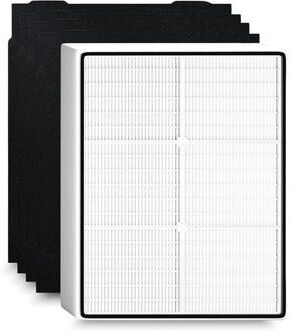
Monster Cable Filter-Monster Replacement Compatible with Whirlpool Large Air Purifier Kit for Air Purifier ModelsFilter-Monster branded replacement filter kit compatible with Whirlpool Large Air Purifier models AP51030K, AP51030KB, AP45030K, APR45130L, WP500 series and WP1000 series.45,99 $*Shipping: 0,00 $Secure redirect to the provider
-
JML Chillmax Air Pure Chill – Portable Air Cooler & PurifierOverview The JML Chillmax Air Pure Chill is a portable, 3-in-1 cooling solution that keeps you comfortable in hot weather. Combining air cooling, purification, and humidification, it delivers clean, refreshing airflow wherever you need it. With its compact, lightweight design and energy-efficient operation, it’s perfect for home, office, or bedside use. Key Features & Benefits 3-in-1 Functionality – Cools, purifies, and humidifies the air Portable & Compact – Easy to move between rooms or use on a desk Adjustable Airflow – Multiple fan speeds for personalised comfort Energy-Efficient – Low power consumption compared to traditional air conditioners Built-In Air Purification – Helps remove dust and impurities from the air Quiet Operation – Ideal for bedrooms, offices, and relaxation spaces Easy to Use – Simple controls for quick setup and operation Product Description Stay cool and refreshed with the JML Chillmax Air Pure Chill, a portable air cooler that also purifies and humidifies for improved air quality. Perfect for hot summer days, it uses evaporative cooling technology to deliver a natural, refreshing breeze while helping to filter dust and hydrate the air. Its compact design makes it easy to position anywhere, from your desk to your bedside, and its energy-efficient performance ensures low running costs. Quiet, convenient, and versatile, it’s the ideal personal cooling solution for home or work.34,00 £*Shipping: 0,00 £Secure redirect to the provider
-
How do you calculate the braking distance, the braking process, and the braking deceleration?
The braking distance can be calculated using the formula: braking distance = (initial velocity^2) / (2 * deceleration), where the deceleration is the rate at which the vehicle slows down. The braking process involves the driver applying the brakes, which causes friction between the brake pads and the wheels, leading to a decrease in the vehicle's speed. The braking deceleration can be calculated by dividing the change in velocity by the time it takes for the vehicle to come to a complete stop. **
-
How do you calculate the braking time and braking distance?
Braking time and braking distance can be calculated using the formula: Braking distance = (initial velocity^2) / (2 * deceleration) Where initial velocity is the speed of the vehicle before braking, and deceleration is the rate at which the vehicle slows down. Braking time can be calculated by dividing the braking distance by the initial velocity. These calculations are based on the assumption of constant deceleration, and may vary depending on factors such as road conditions and the vehicle's braking system. **
-
What are the differences between braking to walking speed and braking?
Braking to walking speed typically involves gradually reducing speed until coming to a complete stop, whereas braking refers to the act of slowing down a moving vehicle. When braking to walking speed, the goal is to smoothly decelerate without any sudden stops, while braking may involve more forceful actions to slow down quickly. Additionally, braking to walking speed is often used in situations where a vehicle needs to stop at a precise location, such as at a crosswalk or intersection. **
-
How do you calculate braking time and braking distance in physics?
In physics, braking time and braking distance can be calculated using the equations of motion and the principles of kinematics. The braking time can be calculated using the equation t = v/u, where t is the braking time, v is the final velocity, and u is the initial velocity. The braking distance can be calculated using the equation d = (v^2 - u^2) / (2a), where d is the braking distance and a is the deceleration. These equations take into account the initial and final velocities, as well as the deceleration of the object to determine the braking time and distance. **
Similar search terms for Braking
-
Hunter HEPAtech Replacement Air Purifier FilterFeatures: HEPAtech filtration removes up to 99.97% of airborne particles as small as 0.3 microns in size including smoke, dust, pollen, pet hair and dander, mold spores and dust mites Recommended to replace every 12 months for maximum efficiency, or...26,99 $*Shipping: 0,00 $Secure redirect to the provider
-
LivePure True HEPA Air Purifier & HumidifierEnjoy cleaner, healthier air and enhanced comfort with the LivePure LP460 Air Purifier & Humidifier Combo, specially designed to create a soothing environment in your bedroom, living room, or office.119,99 $*Shipping: 0,00 $Secure redirect to the provider
-
LivePure True HEPA Air Purifier & HumidifierEnjoy cleaner, healthier air and enhanced comfort with the LivePure LP460 Air Purifier & Humidifier Combo, specially designed to create a soothing environment in your bedroom, living room, or office.119,99 $*Shipping: 0,00 $Secure redirect to the provider
-
Is braking a reflex?
Braking can be considered a reflex in certain situations. When a driver reacts to a sudden obstacle or hazard on the road by immediately pressing the brake pedal, it can be seen as a reflexive action. This is because the response is automatic and occurs without conscious thought. However, braking can also be a learned behavior, as drivers are trained to use their brakes in specific situations through practice and experience. Therefore, while braking can be a reflex in some cases, it can also be a learned and intentional action. **
-
What is the formula for braking acceleration and braking time in physics?
The formula for braking acceleration is given by \( a = \frac{v_f - v_i}{t} \), where \( a \) is the braking acceleration, \( v_f \) is the final velocity, \( v_i \) is the initial velocity, and \( t \) is the time taken to come to a stop. The formula for braking time can be calculated using the equation \( t = \frac{v_f - v_i}{a} \), where \( t \) is the braking time. These formulas are used to calculate the rate at which an object slows down when braking. **
-
What is the difference between braking with a clutch and braking without?
Braking with a clutch involves pressing the clutch pedal while simultaneously applying the brakes, which disengages the engine from the transmission and allows the vehicle to coast to a stop. This method is often used in manual transmission vehicles to prevent stalling. On the other hand, braking without using the clutch means simply applying the brakes without disengaging the engine from the transmission, which can cause the vehicle to stall if the engine speed drops too low. In summary, the main difference is that braking with a clutch allows the vehicle to coast to a stop without stalling, while braking without the clutch can potentially lead to stalling if not done properly. **
-
What is the difference between a full braking and an emergency braking?
Full braking refers to applying the brakes with maximum force in a controlled manner to slow down or stop the vehicle. This can be done in response to normal traffic conditions or when approaching a stop sign or traffic light. On the other hand, emergency braking is a sudden and forceful application of the brakes in response to an unexpected hazard or danger, such as a pedestrian stepping into the road or a vehicle suddenly stopping in front. Emergency braking is typically done to avoid a collision and requires quick reflexes and a strong, immediate response from the driver. **
* All prices are inclusive of VAT and, if applicable, plus shipping costs. The offer information is based on the details provided by the respective shop and is updated through automated processes. Real-time updates do not occur, so deviations can occur in individual cases. ** Note: Parts of this content were created by AI.