Buy indiaozone.com ?
We are moving the project
indiaozone.com .
Are you interested in purchasing the domain
indiaozone.com ?
domain@kv-gmbh.de · 0541-91531010
Buy indiaozone.com ?
Are wages liabilities?
Yes, wages are considered liabilities for a company because they represent an obligation to pay employees for their work. From an accounting perspective, wages are typically recorded as a liability on the company's balance sheet until they are paid to the employees. This reflects the company's obligation to fulfill its financial commitments to its employees. Therefore, wages are classified as a liability until they are settled. **
What are liabilities and receivables?
Liabilities are obligations or debts that a company owes to external parties, such as loans, accounts payable, or accrued expenses. They represent the company's financial responsibilities that must be settled in the future. Receivables, on the other hand, are amounts owed to a company by its customers or other parties for goods or services provided. They represent the company's right to receive payment and are considered assets on the company's balance sheet. Both liabilities and receivables are important components of a company's financial position and are crucial for assessing its overall financial health. **
Similar search terms for Liabilities
Top-Angebote
Products related to Liabilities:
-
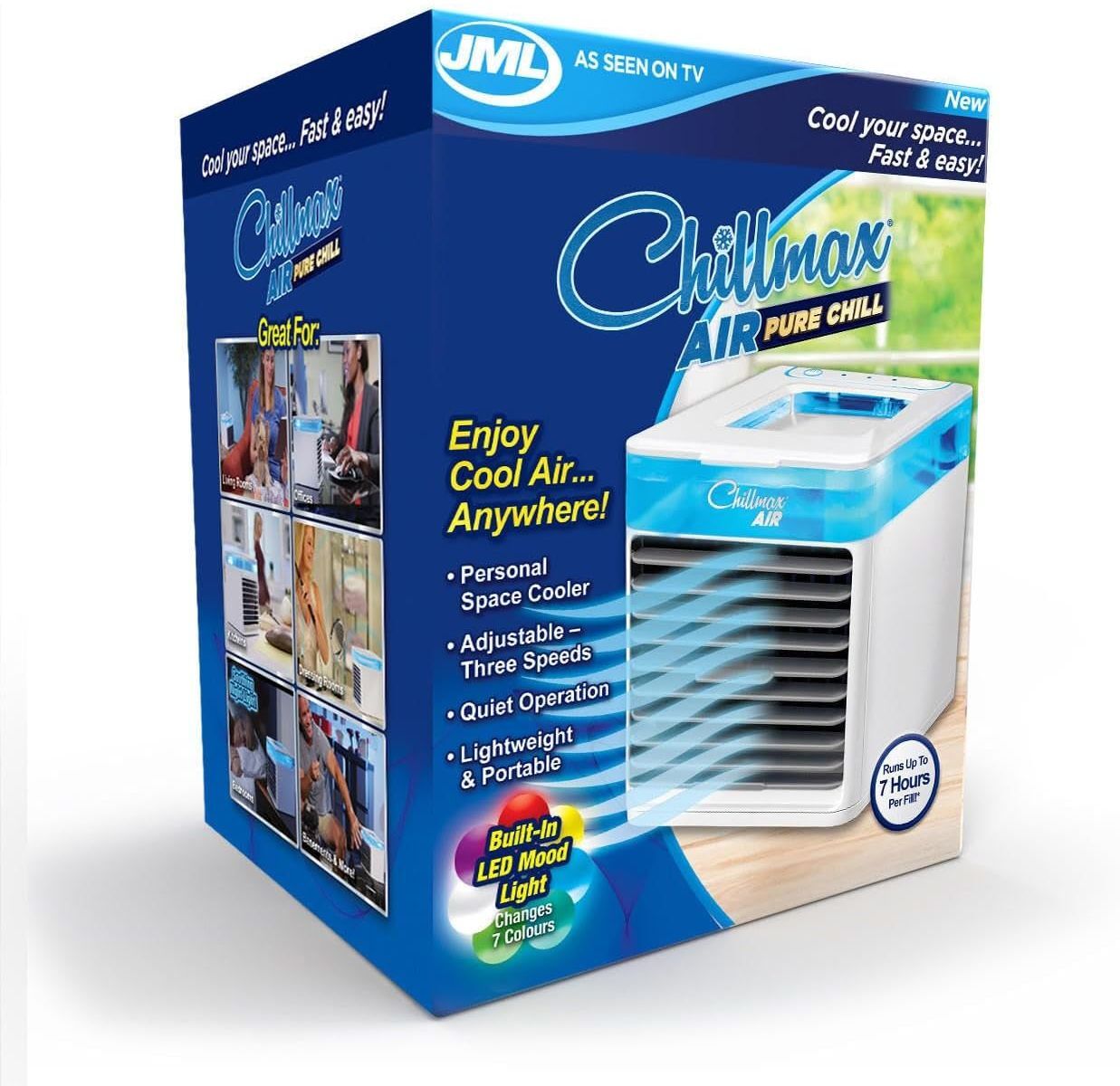
JML Chillmax Air Pure Chill – Portable Air Cooler & PurifierOverview The JML Chillmax Air Pure Chill is a portable, 3-in-1 cooling solution that keeps you comfortable in hot weather. Combining air cooling, purification, and humidification, it delivers clean, refreshing airflow wherever you need it. With its compact, lightweight design and energy-efficient operation, it’s perfect for home, office, or bedside use. Key Features & Benefits 3-in-1 Functionality – Cools, purifies, and humidifies the air Portable & Compact – Easy to move between rooms or use on a desk Adjustable Airflow – Multiple fan speeds for personalised comfort Energy-Efficient – Low power consumption compared to traditional air conditioners Built-In Air Purification – Helps remove dust and impurities from the air Quiet Operation – Ideal for bedrooms, offices, and relaxation spaces Easy to Use – Simple controls for quick setup and operation Product Description Stay cool and refreshed with the JML Chillmax Air Pure Chill, a portable air cooler that also purifies and humidifies for improved air quality. Perfect for hot summer days, it uses evaporative cooling technology to deliver a natural, refreshing breeze while helping to filter dust and hydrate the air. Its compact design makes it easy to position anywhere, from your desk to your bedside, and its energy-efficient performance ensures low running costs. Quiet, convenient, and versatile, it’s the ideal personal cooling solution for home or work.34,00 £*Shipping: 0,00 £Secure redirect to the provider
-
DH Lifelabs Aaira + HEPA Air PurifierThe DH Lifelabs Aaira + HEPA Air Purifier is designed to clean, deodorize and hydrate the air around it using a Hydrochlorous Acid (HOCI) solution made up of non-iodized salt, water and electrolysis. It swiftly eradicates 99.9% of airborne bacteria and viruses found within the air, including such particles as pet dander, pollen, smoke, dust, allergens and odours. It uses a 3-stage filtration system consisting of a pre-filter, a HEPA filter and an activated carbon filter to eliminate particles as small as 0.1 microns for the purest air possible. This Air Purifier can be controlled wirelessly vie the DH Lifelabs app, allowing you to turn it on and set your preferences ready for when you get home, go to bed, wake up, or get to work, depending on where you place it. Due to its larger size, this air purifier can be freestanding on the corner, or it can be placed on a chest of drawers or side table for elevation.Dimensions: 89.3 (H) x 34.7 (W) x 34.7 (D) cm. 4 Fan Speeds - Sleep, 1, 2 and 3. 2 hour, 4 hour and 8 hour timer. Air quality sensor: Blue - Good, Yellow - Moderate, Red - Poor. Operates at Power Consumption: 80 Watts. Weight: 9.7kg (without water).299,99 £*Shipping: 0,00 £Secure redirect to the provider
-
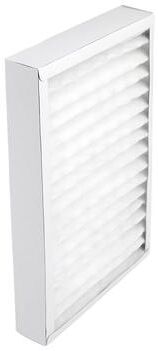
Hunter HEPAtech Replacement Air Purifier FilterFeatures: HEPAtech filtration removes up to 99.97% of airborne particles as small as 0.3 microns in size including smoke, dust, pollen, pet hair and dander, mold spores and dust mites Recommended to replace every 12 months for maximum efficiency, or...26,99 $*Shipping: 0,00 $Secure redirect to the provider
-
LivePure True HEPA Air Purifier & HumidifierEnjoy cleaner, healthier air and enhanced comfort with the LivePure LP460 Air Purifier & Humidifier Combo, specially designed to create a soothing environment in your bedroom, living room, or office.119,99 $*Shipping: 0,00 $Secure redirect to the provider


-
Why is equity on the liabilities side?
Equity is placed on the liabilities side of the balance sheet because it represents the claims of the company's owners or shareholders on the company's assets. It is considered a liability because the company has an obligation to its owners to repay their investment in the business. However, unlike other liabilities, equity does not have a fixed repayment schedule and is considered a residual claim, meaning it is only paid out after all other liabilities have been settled. Therefore, equity is categorized as a liability on the balance sheet to accurately reflect the financial obligations of the company. **
-
What are transitory assets and/or liabilities?
Transitory assets and/or liabilities are items on a company's balance sheet that are expected to be settled or used up within a relatively short period of time, typically within one year. These items are considered to be temporary in nature and are not expected to have a long-term impact on the company's financial position. Examples of transitory assets include cash, accounts receivable, and inventory, while examples of transitory liabilities include accounts payable and short-term debt. It is important for investors and analysts to understand the nature of these transitory items when evaluating a company's financial health and performance. **
-
How are the assets and liabilities evaluated?
Assets and liabilities are evaluated based on their current market value or book value. For assets, this means determining their fair market value, which is the price that they could be sold for in the current market. Liabilities are evaluated based on their current outstanding balance or the amount that is owed. This evaluation helps to determine the financial health and position of a company, as well as its ability to meet its financial obligations. **
-
What is a statement of assets and liabilities?
A statement of assets and liabilities is a financial document that provides a snapshot of an individual's or organization's financial position at a specific point in time. It lists all the assets, such as cash, investments, property, and equipment, as well as all the liabilities, such as loans, mortgages, and other debts. The statement helps to assess the overall financial health and solvency of the entity by comparing the total assets to the total liabilities. It is an essential tool for financial planning, decision-making, and assessing the ability to meet financial obligations. **


How can liabilities be settled in other ways?
Liabilities can be settled in other ways through various means such as debt restructuring, where the terms of the debt are renegotiated to make it more manageable for the debtor. Another way is through debt-for-equity swaps, where the creditor agrees to convert the debt into an ownership stake in the debtor's company. Additionally, liabilities can be settled through the sale of assets, where the debtor sells off assets to generate cash to pay off the liabilities. Finally, some liabilities can be settled through the issuance of new debt to replace the existing liabilities, known as refinancing. **
What is the difference between receivables and liabilities?
Receivables are amounts owed to a company by its customers or other parties for goods or services provided, while liabilities are obligations or debts that a company owes to its creditors or other parties. In other words, receivables represent money that is owed to the company, while liabilities represent money that the company owes to others. Receivables are considered assets on the company's balance sheet, while liabilities are recorded as obligations or debts. **
Top-Angebote
Products related to Liabilities:
-
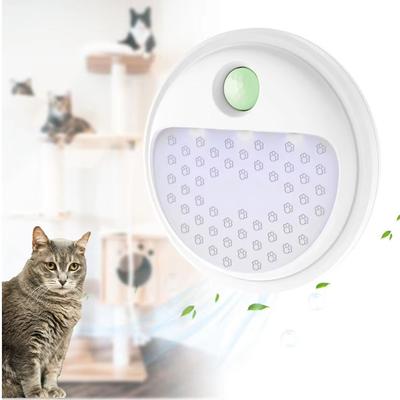
Inspired Finds Smart Cat Odor Purifier Rechargeable Litter Box Deodorizer Pet Air Purifier Smart Cat Odor Purifier Rechargeable Litter Box Deodorizer Pet Air PurifierKeep your home smelling fresh even with multiple pets thanks to this smart cat odor purifier designed for litter boxes, pet toilets, and small spaces. This compact device quietly works in the background to neutralize smells instead of just masking...99,99 $*Shipping: 0,00 $Secure redirect to the provider
-
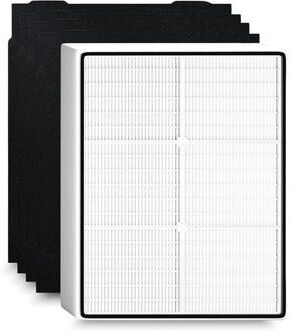
Monster Cable Filter-Monster Replacement Compatible with Whirlpool Large Air Purifier Kit for Air Purifier ModelsFilter-Monster branded replacement filter kit compatible with Whirlpool Large Air Purifier models AP51030K, AP51030KB, AP45030K, APR45130L, WP500 series and WP1000 series.45,99 $*Shipping: 0,00 $Secure redirect to the provider
-
JML Chillmax Air Pure Chill – Portable Air Cooler & PurifierOverview The JML Chillmax Air Pure Chill is a portable, 3-in-1 cooling solution that keeps you comfortable in hot weather. Combining air cooling, purification, and humidification, it delivers clean, refreshing airflow wherever you need it. With its compact, lightweight design and energy-efficient operation, it’s perfect for home, office, or bedside use. Key Features & Benefits 3-in-1 Functionality – Cools, purifies, and humidifies the air Portable & Compact – Easy to move between rooms or use on a desk Adjustable Airflow – Multiple fan speeds for personalised comfort Energy-Efficient – Low power consumption compared to traditional air conditioners Built-In Air Purification – Helps remove dust and impurities from the air Quiet Operation – Ideal for bedrooms, offices, and relaxation spaces Easy to Use – Simple controls for quick setup and operation Product Description Stay cool and refreshed with the JML Chillmax Air Pure Chill, a portable air cooler that also purifies and humidifies for improved air quality. Perfect for hot summer days, it uses evaporative cooling technology to deliver a natural, refreshing breeze while helping to filter dust and hydrate the air. Its compact design makes it easy to position anywhere, from your desk to your bedside, and its energy-efficient performance ensures low running costs. Quiet, convenient, and versatile, it’s the ideal personal cooling solution for home or work.34,00 £*Shipping: 0,00 £Secure redirect to the provider
-
DH Lifelabs Aaira + HEPA Air PurifierThe DH Lifelabs Aaira + HEPA Air Purifier is designed to clean, deodorize and hydrate the air around it using a Hydrochlorous Acid (HOCI) solution made up of non-iodized salt, water and electrolysis. It swiftly eradicates 99.9% of airborne bacteria and viruses found within the air, including such particles as pet dander, pollen, smoke, dust, allergens and odours. It uses a 3-stage filtration system consisting of a pre-filter, a HEPA filter and an activated carbon filter to eliminate particles as small as 0.1 microns for the purest air possible. This Air Purifier can be controlled wirelessly vie the DH Lifelabs app, allowing you to turn it on and set your preferences ready for when you get home, go to bed, wake up, or get to work, depending on where you place it. Due to its larger size, this air purifier can be freestanding on the corner, or it can be placed on a chest of drawers or side table for elevation.Dimensions: 89.3 (H) x 34.7 (W) x 34.7 (D) cm. 4 Fan Speeds - Sleep, 1, 2 and 3. 2 hour, 4 hour and 8 hour timer. Air quality sensor: Blue - Good, Yellow - Moderate, Red - Poor. Operates at Power Consumption: 80 Watts. Weight: 9.7kg (without water).299,99 £*Shipping: 0,00 £Secure redirect to the provider
-
Are wages liabilities?
Yes, wages are considered liabilities for a company because they represent an obligation to pay employees for their work. From an accounting perspective, wages are typically recorded as a liability on the company's balance sheet until they are paid to the employees. This reflects the company's obligation to fulfill its financial commitments to its employees. Therefore, wages are classified as a liability until they are settled. **
-
What are liabilities and receivables?
Liabilities are obligations or debts that a company owes to external parties, such as loans, accounts payable, or accrued expenses. They represent the company's financial responsibilities that must be settled in the future. Receivables, on the other hand, are amounts owed to a company by its customers or other parties for goods or services provided. They represent the company's right to receive payment and are considered assets on the company's balance sheet. Both liabilities and receivables are important components of a company's financial position and are crucial for assessing its overall financial health. **
-
Why is equity on the liabilities side?
Equity is placed on the liabilities side of the balance sheet because it represents the claims of the company's owners or shareholders on the company's assets. It is considered a liability because the company has an obligation to its owners to repay their investment in the business. However, unlike other liabilities, equity does not have a fixed repayment schedule and is considered a residual claim, meaning it is only paid out after all other liabilities have been settled. Therefore, equity is categorized as a liability on the balance sheet to accurately reflect the financial obligations of the company. **
-
What are transitory assets and/or liabilities?
Transitory assets and/or liabilities are items on a company's balance sheet that are expected to be settled or used up within a relatively short period of time, typically within one year. These items are considered to be temporary in nature and are not expected to have a long-term impact on the company's financial position. Examples of transitory assets include cash, accounts receivable, and inventory, while examples of transitory liabilities include accounts payable and short-term debt. It is important for investors and analysts to understand the nature of these transitory items when evaluating a company's financial health and performance. **
Similar search terms for Liabilities
-
Hunter HEPAtech Replacement Air Purifier FilterFeatures: HEPAtech filtration removes up to 99.97% of airborne particles as small as 0.3 microns in size including smoke, dust, pollen, pet hair and dander, mold spores and dust mites Recommended to replace every 12 months for maximum efficiency, or...26,99 $*Shipping: 0,00 $Secure redirect to the provider
-
LivePure True HEPA Air Purifier & HumidifierEnjoy cleaner, healthier air and enhanced comfort with the LivePure LP460 Air Purifier & Humidifier Combo, specially designed to create a soothing environment in your bedroom, living room, or office.119,99 $*Shipping: 0,00 $Secure redirect to the provider
-
LivePure True HEPA Air Purifier & HumidifierEnjoy cleaner, healthier air and enhanced comfort with the LivePure LP460 Air Purifier & Humidifier Combo, specially designed to create a soothing environment in your bedroom, living room, or office.119,99 $*Shipping: 0,00 $Secure redirect to the provider
-
How are the assets and liabilities evaluated?
Assets and liabilities are evaluated based on their current market value or book value. For assets, this means determining their fair market value, which is the price that they could be sold for in the current market. Liabilities are evaluated based on their current outstanding balance or the amount that is owed. This evaluation helps to determine the financial health and position of a company, as well as its ability to meet its financial obligations. **
-
What is a statement of assets and liabilities?
A statement of assets and liabilities is a financial document that provides a snapshot of an individual's or organization's financial position at a specific point in time. It lists all the assets, such as cash, investments, property, and equipment, as well as all the liabilities, such as loans, mortgages, and other debts. The statement helps to assess the overall financial health and solvency of the entity by comparing the total assets to the total liabilities. It is an essential tool for financial planning, decision-making, and assessing the ability to meet financial obligations. **
-
How can liabilities be settled in other ways?
Liabilities can be settled in other ways through various means such as debt restructuring, where the terms of the debt are renegotiated to make it more manageable for the debtor. Another way is through debt-for-equity swaps, where the creditor agrees to convert the debt into an ownership stake in the debtor's company. Additionally, liabilities can be settled through the sale of assets, where the debtor sells off assets to generate cash to pay off the liabilities. Finally, some liabilities can be settled through the issuance of new debt to replace the existing liabilities, known as refinancing. **
-
What is the difference between receivables and liabilities?
Receivables are amounts owed to a company by its customers or other parties for goods or services provided, while liabilities are obligations or debts that a company owes to its creditors or other parties. In other words, receivables represent money that is owed to the company, while liabilities represent money that the company owes to others. Receivables are considered assets on the company's balance sheet, while liabilities are recorded as obligations or debts. **
* All prices are inclusive of VAT and, if applicable, plus shipping costs. The offer information is based on the details provided by the respective shop and is updated through automated processes. Real-time updates do not occur, so deviations can occur in individual cases. ** Note: Parts of this content were created by AI.